You are here


Aeschynomene aspera L.
Nomenclature
-
Tribe: AeschynomeneaeGenus: Aeschynomene
SUMMARY
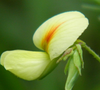
Annual herb, sometimes suffrutescent, to 2 m tall; stems erect, glabrous to sparsely hispid. Leaves imparipinnate, alternate; petioles 3−15 mm long; stipules peltate-appendiculate, glabrous to sparsely hispidulous, striate, 12−15 by 1−2 mm, caducous; rachis up to 1 mm long. Leaflets 60−100 pairs, opposite; petiolules ca. 0.5 mm long; lamina asymmetrically linear-oblong, 5−10 by 1.5 mm, apex subacute, mucronulate, base oblique, margin entire to ciliate, with 1 primary vein, inconspicuous above, conspicuous beneath. Inflorescences with peduncles 4−10 mm long, axillary or terminal, racemose, 1−4-flowered, 1.5−2 cm long, axes with indumentums on branches; bracts thin, 3−5 by 1.5−3 mm, apex acute, base cordate, hispid; bracteoles 2 per flower, similar to the bracts, 4−5 by 2 mm. Flowers 15−20 mm long. Calyx hispid, bilabiate, 6−8 mm long. Petals orange-yellow, pubescent; standard broadly spatulate, 10−15 by 8 mm, apex shallowly emarginate, base clawed; wings obliquely oblong, 8−10 by 3 mm; keel asymmetrically ovate, 15−20 by 6 mm. Stamens c. 15 mm long, glabrous. Ovary linear, green. Pods 6−10 cm long, straight, abaxial suture straight, 4−7 quadrate articles; articles 10 by 7−8 mm, glabrous to hispid. Seeds reniform, 7 by 4−5 mm, black